
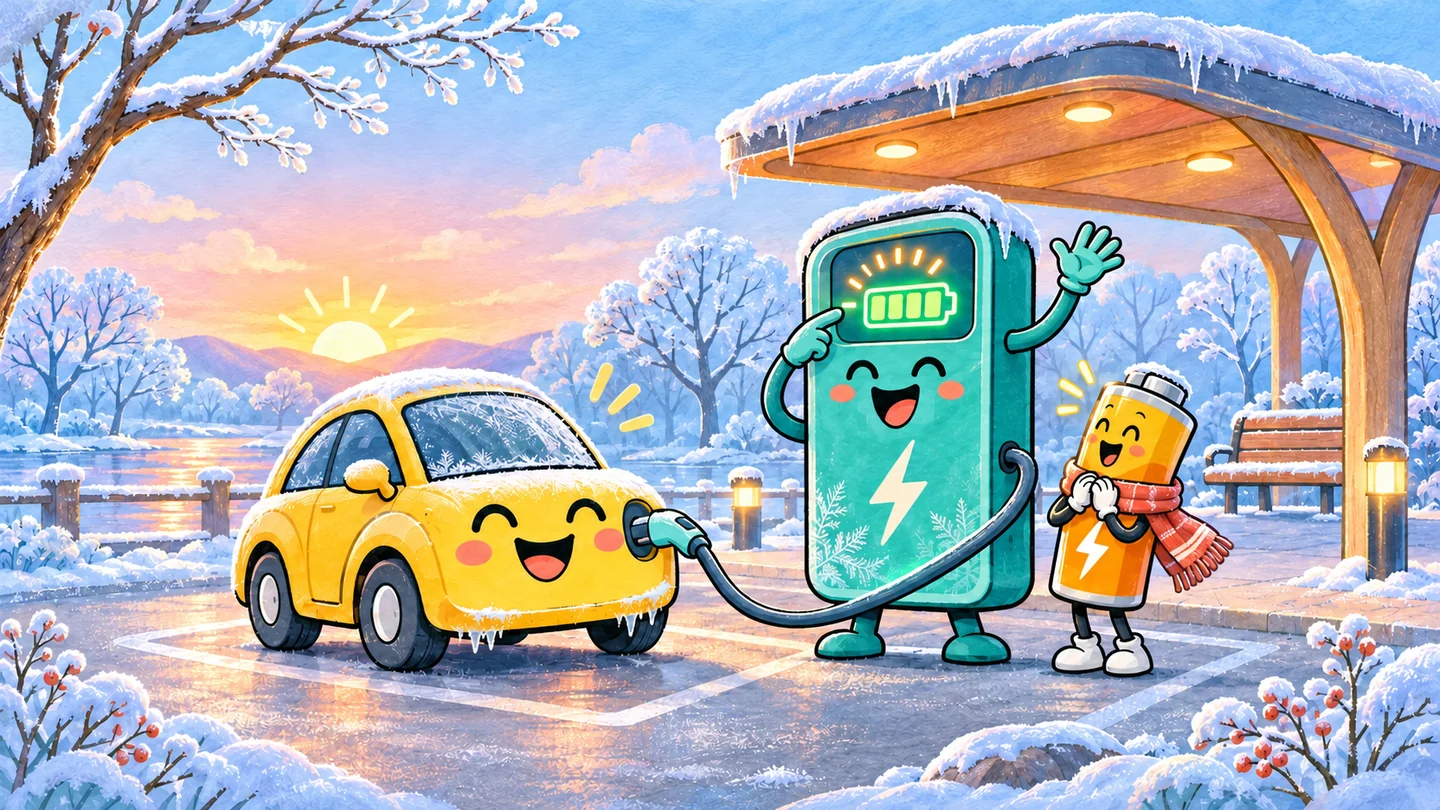
You plug into a 150 kW fast charger on a freezing morning, and the screen shows 40 kW. If the car sat outside overnight, the battery may be cold enough for the car to limit how much power it draws. 150 kW is the charger’s rated maximum. 40 kW is the power it’s delivering at that moment. Both figures are illustrative. Electrify America’s guide to DC fast charging
Watch the power reading after you plug in
If the reading starts low and rises during the session, the battery may be warming up enough to accept more power. If you arrived with a nearly full battery, charging can be slow even when the battery is warm. Check the kW reading alongside the battery percentage to get a better sense of what’s happening. Tesla Model Y cold-weather guide
Let the car warm the battery on the way
On a Tesla Model Y, use the car’s Trip Planner to navigate to a Supercharger. The car warms the battery on the way. Tesla recommends starting navigation 30 to 45 minutes before arrival when possible. Tesla Model Y cold-weather guide
If charging is still slow after preconditioning, check the charger’s rated power and the battery percentage when you plugged in. If one charger is repeatedly slower than others under similar conditions, tell the charging network the charger ID, session start time, and displayed power in kW.
Related reading · How should you care for your EV battery in winter?