
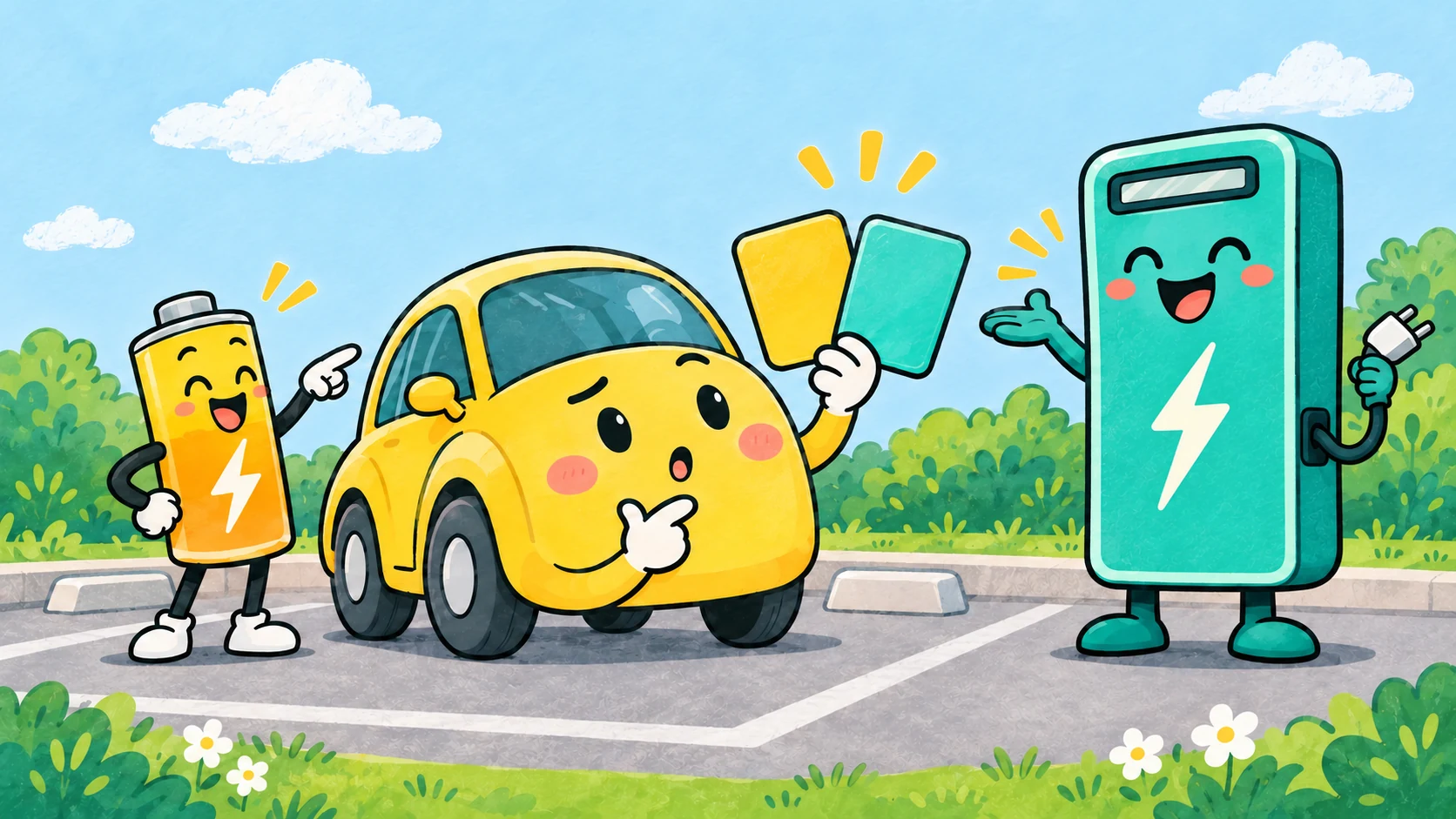
At a public EV charger, the price for the same amount of electricity can depend on which charging card or app you use. The provider you use to start the session determines which tariff applies. The examples below are from European charging services; access and prices vary by country, location and provider.
Your charging card identifies your membership
A charging membership card tells the service whose customer you are. Payment may then come from a credit card registered to that account. The card you tap to start charging and the card used to pay can serve different purposes.
For example, Electroverse’s customer terms distinguish the charging card linked to your account from the payment method used to settle your bill. With this arrangement, changing the registered credit card alone does not change your charging service.
Using another operator’s charger through roaming
If you use an A membership card at a partner charger operated by B, you are using a roaming service. It gives you access to another network, but a separate partner rate may apply.
You may be able to pay the operator directly or use a separate charging service. These routes can have different tariffs. Roaming through an existing account is also different from paying as a guest without a charging-service account.
IONITY’s access and payment guide explains that customers can use its European network through a mobility service provider, or MSP. These providers offer their own tariffs, with or without subscriptions. Its pricing FAQ directs MSP customers to their chosen provider for the applicable price.
The number printed on a charger may need a closer check, too. Electroverse’s FAQ notes that its rates can differ from paying an operator directly, and that some charger stickers are outdated. For an Electroverse session, it says the price in its app is the one you will be charged.
Check the rate for the card you plan to use
Identify the charging operator, then check your chosen card or app’s tariff for that charger. A price per kWh tells you the charge for each kilowatt-hour delivered.
Suppose two payment routes cost €0.40 and €0.50 per kWh. For the same 30 kWh session, the energy charges would be €12 and €15. These are hypothetical prices, not actual operator tariffs, and exclude additional charges or discounts. Check any subscription or session fees as well when comparing the total cost.
Neither an operator’s own membership nor a roaming card is always the cheaper option. Compare the rates and conditions that apply when you charge. If a bill differs from what you expected, start with the session record and tariff information from the membership card or app you used.
Related reading: What does kWh mean on your electricity bill?
GROO EV for charging site operators
Outsource daily operations. Reduce operating costs.

Combine managed operations with GROO EV to bring charger monitoring, charging records and settlement into one place. Cut repetitive work and administrative overhead to help lower the cost of running your charging sites.
Savings depend on site size, service scope and existing contracts.
For adoption enquiries, use the “Chat with us” button at the bottom right.